Last month Fitbit celebrated their 10-year anniversary. Since 2007 they’ve been focused on their mission “to help people live healthier, more active lives.” Five years after Fitbit started selling activity trackers, Fitabase launched as a platform help the healthcare and research community make the most of these innovative devices and the enormous amount of data they collect. In that short time, we at Fitabase have seen the research and digital health community realize that activity tracking devices like Fitbit offer a unique way to understand health and behavior. It’s not just unique, it’s game-changing. For a research community that was accustomed to asking people to fill out surveys or wear bulky and expensive sensors, the ability to give participants low-cost objective monitors that participants actually like wearing and receive continuously updated data has revolutionized research designs.
This month our Fitabase Research Library surpassed 300 studies. This is a big milestone for the field, and we thought it would be a good time to take an in-depth look at how Fitbit devices have been used in research and where the future of research and healthcare might be taking us.

Are they usable?
Research is a tricky endeavor. Even if you have a great idea, secure funding, and are able to recruit participants, there is no guarantee that your participants will do what you ask them to. This is especially true when you ask them to wear new technology that they’re not familiar with. While Fitbit has sold over 50 million devices, many people are unaware of the company or may not be technically savvy enough to use them without guidance. Thankfully there is a fair amount of preliminary research investigating how feasible it is to use these devices in a variety of populations.
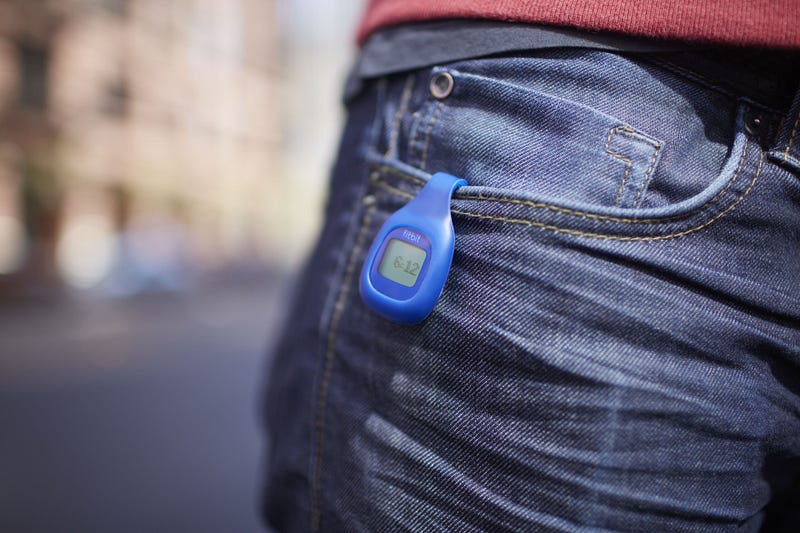
In our exploration of the available literature, we’ve identified over 40 studies that have examined feasibility and usability of deploying Fitbit devices in measurement trials, interventions, and remote monitoring programs. It appears that a wide range of populations are adept at integrating Fitbit devices into their lives in these research trials.
We’ve heard many times that there is some concern about whether or not older adults are able to use these devices, which stems from stereotypes about older adults’ ability to navigate technology. Those fears appear to be unfounded. In a recent study examining older adults’ (aged 70–96) perceptions of using Fitbit One devices for tracking physical activity, most participants positively rated their Fitbit experience after 10 weeks of use, and again after 8 months of use.¹
“Older adults with little technology experience, low levels of physical activity, as well as diverse physical activity goals and abilities, found the physical activity monitor [Fitbit One] easy to use and useful for self-tracking their physical activity.” ¹
The findings have been echoed in other research that has explored the experiences of patients and individuals participating in interventions. A short trial using Fitbit Zips in men with prostate cancer not only found that participants thought the Fitbit was “comfortable and easy to wear,” but also found that they thought the data should be shared with their care team.²
“Clearly, the primary care physician, the one that’s supposed to be your first point of contact, and so the ongoing collaborator in your wellbeing would be essential. And then depending on each person’s situation, and the teams wrapped around, and whatever team would seem appropriate to be looking at that data that would help them design a better intervention or better and better treatment that all makes sense to me.” -research participant²
It’s not just adults either; adolescents have favorably rated their experiences using Fitbit devices in research trials. In a small intervention that included adolescent and adult survivors of childhood cancer, participants were asked about their experience using the Fitbit. Every participant that completed the follow up stated that they intended to continue using their Fitbit and would recommend it to other cancer survivors.³
The findings from usability trials have consistently been positive. This is not surprising given Fitbit’s focus on designing a leading consumer experience since it’s inception. It’s possible that this focus on engaging hardware and software have lead to broad acceptability across many different populations. Of course, the quality of data is also important, so let’s tackle that next.

Can we trust the data?
As the leading data management platform for Fitbit devices, we constantly hear from researchers, healthcare companies, trialists, and a variety of other organizations that are interested in leveraging these new technologies to meet their needs. Often, the first question we hear is, “Are they valid?” or, “How do they compare to device X?” This is a perfectly natural question to ask. At its core research is a quest for truth, and data need to be accurate to be useful for answering scientific questions.
While we’re not in the business of validating Fitbit devices, we’re confident that we’ve compiled the definitive (and continually updated) database of validation studies. Of the 301 studies in our database, 96 have a primary focus on validation (representing 32% of all studies). In fact, one of the first validation studies was completed by yours truly and presented at the 2012 American College of Sports Medicine conference.⁴
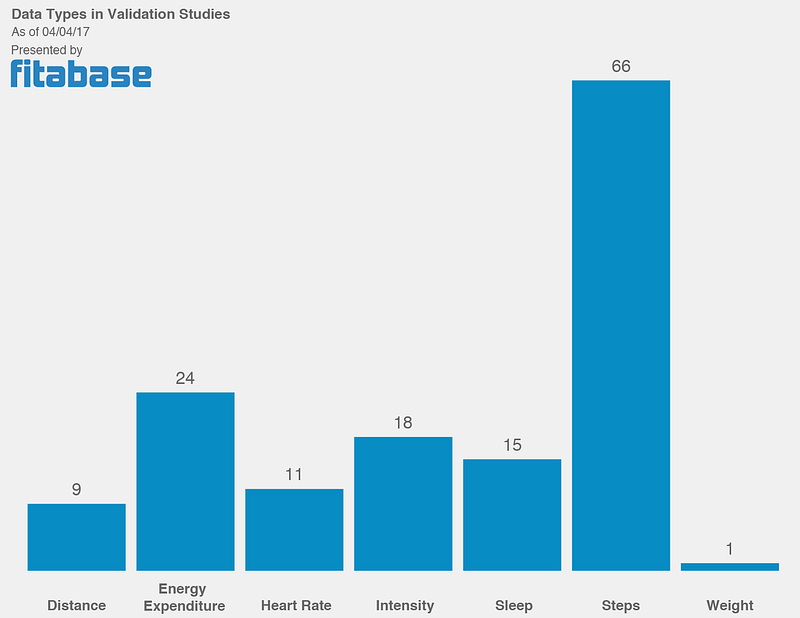
Synthesizing all 96 validation studies calls for much more depth than what we’re doing here. However, I did take some time to better understand how validation studies are conducted, and what we can learn from these studies. I subset all the validation studies in our database and pulled information about publication year, devices tested, and the data types that were examined. Here’s what I found.
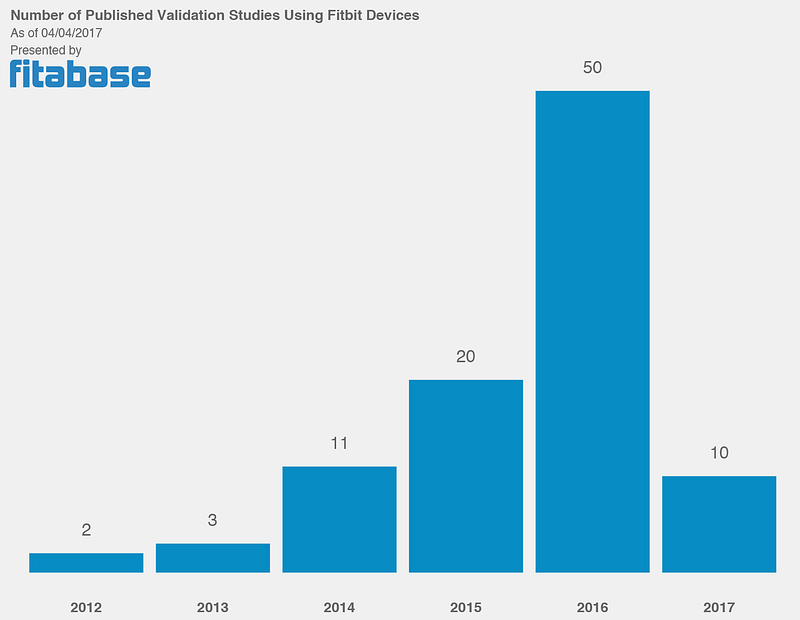
There has been a steady increase in the number of published validation studies, from two studies in 2012 to 50 in 2016. We just finished the first quarter of 2017, but it looks like the pattern will hold and we’ll have another 40–50 published studies by the end of the year. New validation studies will undoubtedly explore new devices, and possibly even some of the datasets Fitbit is collecting.
When we explore the devices and data things are even more interesting. Fitbit has been iterating and releasing new devices every year or so since the Classic was shipped to early testers in 2009. It took a few years for researchers to catch on, and they’ve been playing catch-up ever since. The most popular device in terms of validation work is the Fitbit One, but we’re starting to see more and more work exploring data from the Charge HR. However, you may recall that the Charge HR has been retired in favor of the new Charge 2. You might notice that the Charge 2, Alta, Alta HR, and Blaze are not listed in the chart. We’ve yet to see any published work that explores data generated by those devices.
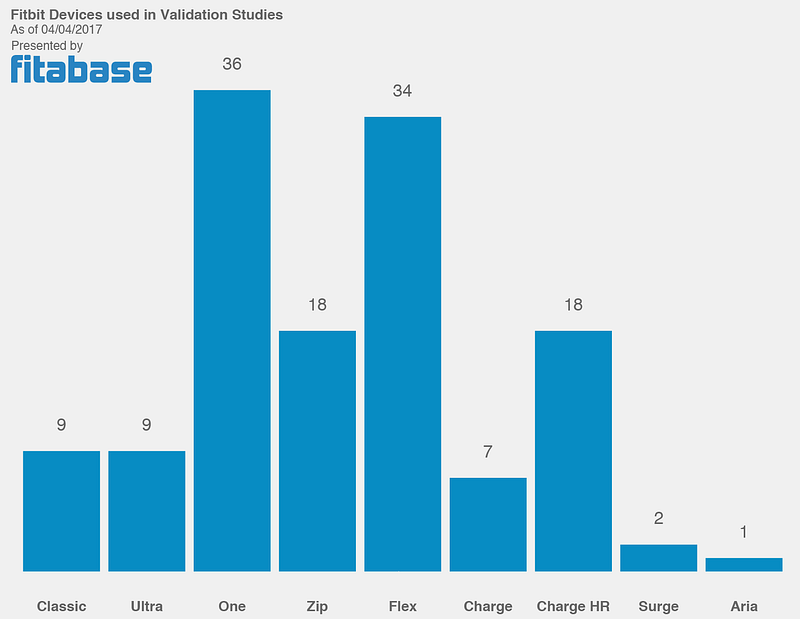
It’s no surprise that steps are the most commonly studied variable, but nearly all of Fitbit’s metrics have been explored. Heart rate debuted with the Charge HR in early 2015, but no heart rate validation studies were published until 2016. We’ve also started to see more sleep validation studies in recent years, possibly due to Fitbit’s automatic sleep tracking features.
It will be interesting to continue to track these trends as Fitbit just announced a move to sleep stage detection with their newest trackers (Charge 2, Alta HR, and Blaze). We’re very excited that Fitbit will be presenting on this new feature at the leading sleep research conference (2017 Annual Meeting of the Associated Professional Sleep Societies) later this year.
Perhaps more interesting than what’s being validated is who these devices are being validated with. We’ve identified 16 studies that validated Fitbit devices in patient populations. From patient recovery to remote monitoring of specific disease groups, researchers continue to explore how Fitbit devices can be used to better understand activity and healthy behaviors. For example,
[the]Fitbit-Flex is accurate in assessing attainment of physical activity guideline recommendations and is useful for monitoring physical activity in cardiac patients.⁵
The top-performing pedometer in our study, the Fitbit Zip, accurately measures step counts in both healthy volunteers and patients recovering from COPD exacerbations.⁶
We are looking forward to seeing more validation studies, especially those exploring new devices and types of data like the cardio fitness score and sleep stages.

Do they help?
We’ve seen a growing number of researchers gravitate towards using Fitbit devices in their studies in order to explore new and exciting methods for improving physical activity. Fitbits offer a variety of features and capabilities that make them attractive to behavioral scientists and interventionists who want to help people become more active. First, they’re consumer devices with a consumer friendly design. This leads to better compliance, and hence better data, during the course of interventions. Second, the data is available in near real-time. Since Fitbit transitioned to Bluetooth Low Energy (BTLE) and launched their mobile applications, Fitbit devices have been able to consistently sync and send data to Fitbit’s servers. And last, but definitely not least in our minds, is the availability of the Fitbit API. This API powers our Fitabase platform, and it allows researchers to access both aggregated and high-resolution data for more interactive and innovative trial designs.
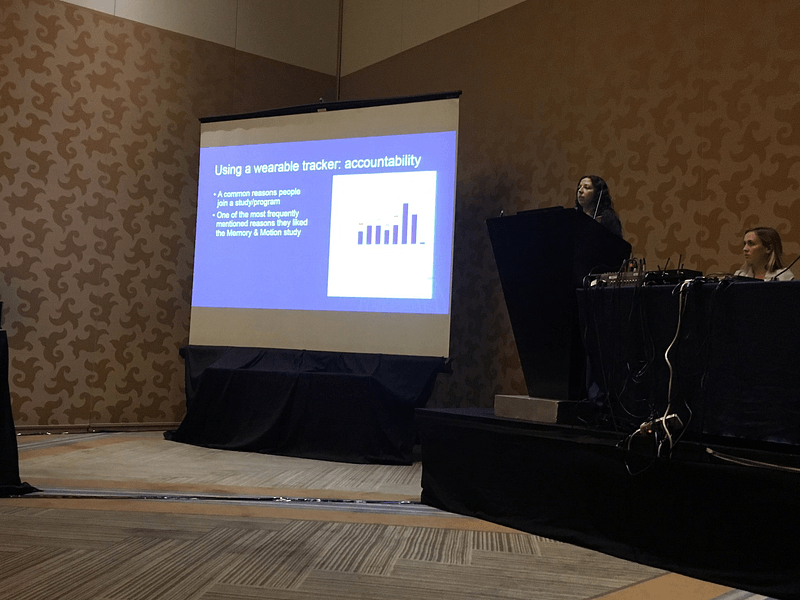
As Dr. Sheri Hartman, Assistant Professor at the Department of Family and Preventive Medicine and Cancer Prevention and Control at the UCSD Moores Cancer Center, stated at the recent Society for Behavioral Medicine Conference, “The ability to see continuous up-to-date information about my participants’ physical activity allows me to be proactive instead of just reactive.”
Dr. Hartman is just one of a growing group researchers who have implemented Fitbit in intervention studies. In her work with women who have elevated breast cancer risk, she found positive results for integrating continuously updated data from devices (Fitbit One) with telephone and email counseling. Intervention participants had greater weight loss than control participants, and increased time spent in moderate-to-vigorous physical activity by 15 minutes per day.⁷
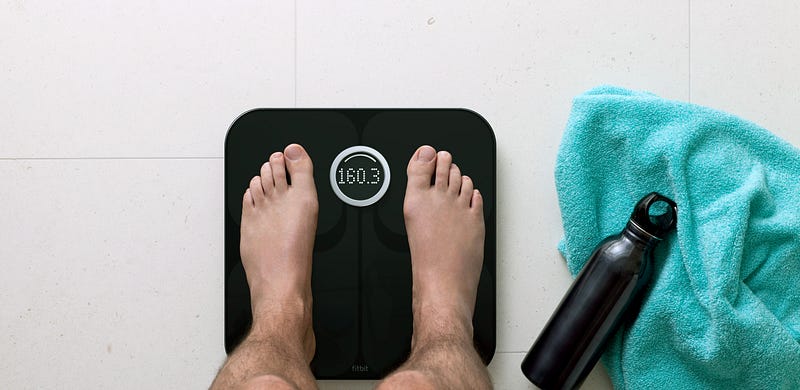
Another study that used the unique features of Fitbit devices compared the differences between “standard” self-monitoring, technology-enabled self-monitoring, and technology-enabled self-monitoring plus phone counseling for overweight and obese adults. In the standard group, participants were given a pedometer, a standard weight scale, and a calorie reference book. In the technology group, participants were given a Fitbit Zip, a Fitbit Aria scale, and access to the Fitbit mobile app for food tracking. The phone counseling group received the same Fitbit devices (app, Zip, and Aria) and received scheduled calls with counselors who reviewed the participant’s data (using our Fitabase platform).
The authors found that after six months, participants in the technology and technology plus counseling groups were more likely to have lost 5% of their starting weight. Additionally, compliance with using the the devices was high. Participants wore the Fitbit on 75% (tech only) to 85% (tech + phone) of 180 study days on average, and tracked weight on 56% (tech only) to 73% (tech + phone) of study days.⁸ These results demonstrate that newer self-monitoring technology plus brief phone-based intervention can improve adherence to self-monitoring and lead to greater weight losses than traditional paper-based self-monitoring tools.
These are just two of the over 70 studies that have used Fitbit devices as part of an intervention. Many have shown improved physical activity, weight loss, and improvements in daily functioning. Across many studies, the impact of personal feedback for participants from the Fitbit devices and the ability of coaches and counselors to view data was seen as a positive improvement over “usual care” or standard intervention protocols. While we’re excited to see such great results , we know that researchers have just begun experimenting with what’s possible.

What’s next?
Even though it’s been five years since Fitbit has started showing up in the research world, it feels like we’ve just scratched the surface. The wide availability and usability of these consumer devices, and the ability to gather continuous streams of data are reshaping how we think about impacting health and wellbeing. We’ve identified a few emerging trends through our ongoing conversations with researchers, healthcare professionals, and clinicians.
Remote Monitoring. As mentioned above, the ability to gather real world data about how active people are, how much they weigh, and even what they report eating, can have a profound impact on how patients are treated. It’s easy to think about how these devices might be used with individuals just discharged from treatment. For instance, consider someone who undergoes a cardiac procedure in a hospital setting. Typically they’re enrolled in a cardiac rehab protocol that may require them to travel back to the hospital or a local community center to participate. What if you could outfit those patients with suite of devices and applications that are remotely monitored and used by health coaches to encourage the right amount and type of activity? Especially with newer Fitbit devices that track heart rate, researchers could monitor potentially important signals about time spent in different activity intensities and energy expenditure.
Another interesting trend we’re noticing in remote monitoring is in post-surgical treatment and measurement. We’ve identified 10 studies that have used Fitbit devices to measure and/or intervene on patients’ physical activity behavior after minor and major surgical procedures. For example, one efficacy study (in press) used a combination of Fitbit Zip devices, coaching calls, and in-person meetings to improve participants’ physical activity after total knee arthroplasty. They found that patients were adherent to the protocol, with a 100% retention rate through 12 weeks, and a 92% overall adherence rate for tracking physical activity through the device.⁹ While many of the post-surgical remote monitoring and intervention trials have been small and focused on testing feasibility, we’re hopeful that future trials will fully take advantage of the power to track activity and launch just-in-time personalized interventions to improve short and long-term outcomes.
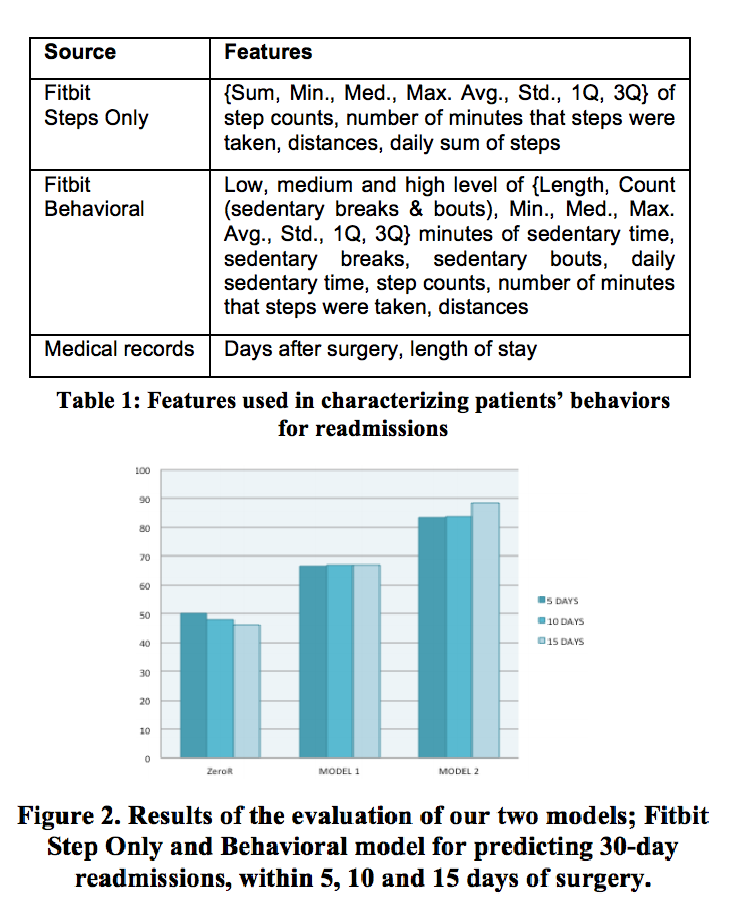
Signal Detection. Often Fitbit devices are lumped into one broad category of “wellness” or “weight loss” tools. Sure, they track steps, but the breadth of data they collect has many uses other than telling people how close they are to their daily 10,000 step goal. One of my favorite research papers comes from a group of enterprising Human-Computer Interaction researchers at Carnegie Mellon University and the University of Pittsburgh. They recruited a group of patients with metastatic peritoneal cancer and outfitted them with Fitbit Flex devices to wear during post-operative inpatient recovery. Using a combination of steps and activity intensity (sedentary behavior) data from the devices they were able to create a machine-learning model that predicted hospital readmission with nearly a 90% accuracy.¹⁰ Of course this is just one study, but these findings may lead to interesting work in remote activity and sedentary behavior monitoring in which clinicians can intervene and encourage appropriate amounts of activity to prevent costly readmissions.
Older Adult Care. I outlined a study above that demonstrated the feasibility of using Fitbit devices with older adults. In our work, we identified 25 studies that explicitly sought to recruit older adults into trials and studies that used Fitbit devices, including a paper with the great title, ‘Well, if the kids can do it, I can do it’: older rehabilitation patients’ experiences of telerehabilitation.¹¹ Having methods to better understand and encourage healthy movement throughout the lifespan could have profound impact on public health as our population ages. I can even speak from experience. My mother, who has progressed into her 7th decade of life, is an avid Fitbit user (moving from the One, to the Charge HR, and now Blaze). She finds the data and insights from wearing a Fitbit to be motivating and useful as she tries to stay active while she transitions from her full-time career into semi-retirement. Of course, it might help that she’s a math teacher, and much like me, loves numbers.
Population Health. My graduate work was in public health, so it may not be a surprise that I’m interested in better understanding how wearable devices like Fitbit can be used to understand population health. There are tens of millions of active Fitbit users. Fitbit has done a great job of pulling their data together through their FitScience work. For example, you can check out the Fitbit Activity Index to compare activity data and common health issues such as cardiovascular and overweight/obesity risk. There is enormous potential to leverage the data that millions of Americans are creating and collecting to better understand health and wellness within local communities and even the nation as a whole. These data sources aren’t going to replace initiatives like the National Health and Nutrition Examination Survey, but that doesn’t mean we should be ignoring it either.
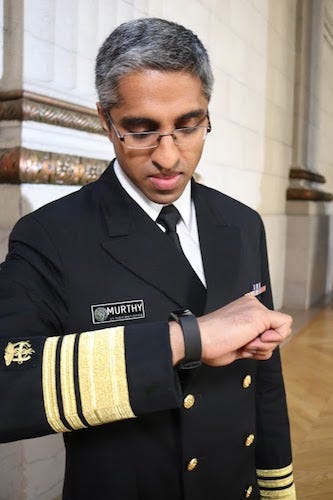
Take for instance the 2016 Step It Up USA Challenge. Last October, the Surgeon General partnered with Fitbit to challenge Americans to walk as much as possible for two weeks. Once the final numbers were tallied, those who signed up had collectively taken nearly 61 billion steps. If we estimate that all those who signed up took 10,000 steps per day on average, then we can assume over 400,000 people signed up for the challenge. Imagine what we could learn about public health, about human behavior, if those 400,000 people allowed researchers to access their Fitbit data. What potential could be unlocked? What insights could be unearthed?
It’s not about steps, it’s about signals.
As Director of Research and Development at Fitabase it is my job to understand the landscape of research and innovation in the consumer wearable space. I’ve been thinking about these issues for a long time. Ever since I started my doctoral program in 2008 and learned about Fitbit by reading Techcrunch when I should have been working, I’ve been on a path to understand how personal data can have a positive impact on both personal and public health. Now here we are. Ten years of Fitbit delivering impactful technology. Five years of Fitabase helping innovative groups take full advantage of the data that technology offers. We now have over 300 publications showing us what’s possible, what’s coming, and how we can use these devices to make a difference in people’s lives.
We’re just getting started, and we can’t wait to see what happens next.

Fitabase is the leading data management platform for researchers who want to use commercial wearables. Since 2012, we’ve supported over 250 studies. If you’re looking to use wearable in your research studies, clinical trials, or innovation projects just get in touch. We’d be happy to help
hello@fitabase.com
References
[1] McMahon SK, Lewis B, Oakes M, Guan W, Wyman JF, Rothman AJ. Older Adults’ Experiences Using a Commercially Available Monitor to Self-Track Their Physical Activity. JMIR mHealth uHealth. 2016;4(2):e35. doi:10.2196/mhealth.5120.
[2] Rosenberg D, Kadokura EA, Bouldin ED, Miyawaki CE, Higano CS, Hartzler AL. Acceptability of Fitbit for physical activity tracking within clinical care among men with prostate cancer. In: AMIA Annual Symposium Proceedings. Vol 2016. American Medical Informatics Association; 2016:1050–1059. PMCID: PMC5333209
[3] Le A, Mitchell H-R, Zheng DJ, et al. A home-based physical activity intervention using activity trackers in survivors of childhood cancer: A pilot study. Pediatr Blood Cancer. September 2016. doi:10.1002/pbc.26235.
[4] Ramirez E, Peterson C, Wu W, Norman GJ. Accuracy of the Fitbit pedometer for self-paced and prescribed physical activity. Med Sci Sport Exerc. 2012;44(5S):648. doi:10.1249/01.mss.0000417529.22755.ed.
[5] Alharbi M, Bauman A, Neubeck L, Gallagher R. Validation of Fitbit-Flex as a measure of free-living physical activity in a community-based phase III cardiac rehabilitation population. Eur J Prev Cardiol. February 2016. doi:10.1177/2047487316634883.
[6] Prieto-Centurion V, Bracken N, Norwick L, et al. Can Commercially Available Pedometers Be Used For Physical Activity Monitoring In Patients With COPD Following Exacerbations? Chronic Obstr Pulm Dis J COPD Found. 2016;3(3):636–642. doi:10.15326/jcopdf.3.3.2015.0164.
[7] Hartman SJ, Nelson SH, Cadmus-Bertram LA, et al. Technology- and Phone-Based Weight Loss Intervention. American Journal of Preventive Medicine. 2016;51(5):714–721. doi:10.1016/J.AMEPRE.2016.06.024.
[8] Ross KM, Wing RR. Impact of newer self-monitoring technology and brief phone-based intervention on weight loss: A randomized pilot study. Obesity. 2016;24(8):1653–1659. doi:10.1002/oby.21536.
[9] Paxton RJ, Forster JE, Miller MJ, Gerron KL, Stevens-Lapsley JE, Christiansen CL. A Feasibility Study for Improved Physical Activity After Total Knee Arthroplasty. J Aging Phys Act. In Press. doi:10.1123/japa.2016–0268.
[10] Bae S, Dey AK, Low CA. Using passively collected sedentary behavior to predict hospital readmission. In: Proceedings of the 2016 ACM International Joint Conference on Pervasive and Ubiquitous Computing — UbiComp ’16. New York, New York, USA: ACM Press; 2016:616–621. doi:10.1145/2971648.2971750.
[11] Shulver W, Killington M, Morris C, Crotty M. “Well, if the kids can do it, I can do it”: older rehabilitation patients’ experiences of telerehabilitation. Heal Expectations. 2017; 20(1):120–129. doi:10.1111/hex.12443.